
 EN
EN
 CN
CN
 TH
TH
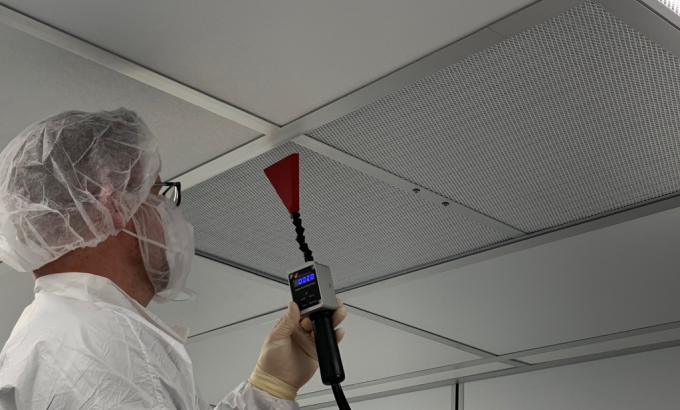
Dispersed oil particulate (DOP) scan testing, also known as filter integrity testing or leak testing, is one of the most widely recognized industry-standard methods for verifying the performance of high-efficiency particulate air (HEPA) filters. This test is critical in environments where sterile conditions and controlled air quality are mandatory, such as pharmaceutical manufacturing, biotechnology facilities, and cleanroom operations.
1. Importance of Regular Testing
The test should be repeated at fixed intervals to confirm that continuous filtration remains effective. By introducing a controlled aerosol challenge upstream of the filter and measuring the downstream output, operators can determine whether the filter is performing within acceptable limits. This routine verification ensures compliance with regulatory standards and protects product quality and patient safety.
2. Regulatory Standards
HEPA filter leak testing is explicitly required in several international guidelines:
-
FDA Guidance for Industry: Aseptic Processing for the Manufacture of Sterile Pharmaceuticals
-
Current Good Manufacturing Practices (cGMP)
-
WHO Technical Report Series, No. 961
-
ISO 14644-3 Cleanroom Standards, which provide detailed procedures for testing and validation
These standards emphasize that filter integrity testing is not optional but a mandatory part of cleanroom qualification and ongoing monitoring.
3. Traditional Testing Methods
Since the 1950s, aerosol photometric testing has been the established method for detecting leaks. This technique is sensitive enough to measure scan tests at levels as low as 0.003%. However, accuracy depends heavily on ensuring spatial uniformity of the aerosol challenge across the upstream face of the filter.
-
If aerosol concentrations vary significantly, localized high or low particle densities may cause false failures or false passes.
-
ISO 14644-3 specifies that aerosol concentration should not fluctuate more than ±15% over time.
-
Verification of uniformity upstream is therefore essential before conducting the scan.
4. Cleanroom Testing Considerations
When testing an entire cleanroom suite, aerosol injection should occur after the air handling unit (AHU). This ensures that the challenge particles are well mixed within the ductwork before reaching the filter face, creating a consistent concentration across the filter surface. Proper mixing reduces the risk of uneven particle distribution and improves the reliability of results.
5. Airflow and System Parameters
Before initiating leak testing, airflow parameters must be validated:
-
Flow rate through the filter should be established and stable.
-
Air volume, balance, and velocity tests (as described in ISO 14644-3) should be performed to confirm that the system operates within specified ranges.
-
These preliminary checks ensure that subsequent conformance and leakage testing are meaningful and accurate.
6. Acceptance Criteria
ISO 14644-3 allows for permeation testing challenges with substitution agreements between customer and supplier, typically at 0.01% leakage. FDA guidance also specifies a 0.01% maximum leakage threshold. This benchmark ensures that even minor leaks are detected and addressed before they compromise cleanroom integrity.
7. Scanning Procedure
Best practice dictates that scanning should begin at the gasket area rather than the filter face.
-
Gasket leaks can mimic filter media leaks if not identified first.
-
After confirming gasket integrity, scanning should continue across the filter media, the seal between the casing, and finally the filter face.
-
This systematic approach prevents false positives and ensures that any detected leakage is correctly attributed.
Conclusion
DOP scan testing remains a cornerstone of cleanroom validation and HEPA filter integrity assurance. By following international standards, ensuring aerosol uniformity, validating airflow parameters, and applying rigorous scanning procedures, facilities can maintain compliance and safeguard product quality. Long-term reliability of HEPA filters depends not only on their design but also on consistent and accurate integrity testing.